A customer may only carry your product for ten minutes, but the bag, box or mailing pack can be seen dozens of times in that window. The strongest retail packaging ideas treat that journey as useful advertising while still doing the practical work: protecting the purchase, meeting the needs of the product and keeping costs under control.
For UK retailers, food businesses, e-commerce brands and event teams, the right choice is rarely just about selecting the cheapest bag. It is about matching material, size, print and end-of-life options to how customers actually buy, carry and dispose of your packaging.
Retail packaging ideas with a commercial purpose
1. Put a clear brand mark on a carrier bag
A printed carrier bag remains one of the most cost-effective ways to take your identity beyond the counter. A simple logo, distinctive colour and readable web address can be more effective than a crowded design, particularly when the bag is viewed from a distance.
For many retailers, one-colour printing provides a smart, consistent result at a practical price point. Businesses with a more visual identity may benefit from multi-colour spot printing. The key is to allow enough clear space around the design so it is recognisable when the bag is folded, carried or partly covered by a coat.
2. Choose paper bags for considered presentation
Printed paper bags work especially well for boutiques, gift shops, fashion retailers, cafés and premium food businesses. They give a purchase a more deliberate feel and provide a broad surface for branding, messages or seasonal artwork.
Paper is not automatically the right answer for every product, however. Consider the weight being carried, whether the contents may be damp or greasy, and the distance customers are likely to travel. A well-specified paper bag with suitable handles can be an excellent option for lower-volume retail purchases, but a heavier or wetter product may need a different format.
3. Make reusable bags worth keeping
Bags for life can turn a necessary carrier into a repeat brand impression. They suit grocery retailers, garden centres, farm shops, visitor attractions and businesses selling larger purchases. The value is in producing something customers genuinely want to use again rather than a thicker bag with no added appeal.
A strong reusable design often combines practical dimensions with a simple, attractive print. Consider a gusset for capacity, reinforced handles for comfort and a design that does not date quickly. Reuse depends on durability, but it also depends on whether the customer is happy to be seen carrying it.
4. Match the bag format to the product shape
A poor fit looks untidy and can increase material use. A flat bag may suit cards, clothing or small takeaway items, while a gusseted carrier gives boxes, bakery goods and wider retail products room to sit properly.
Before ordering, line up your most common product combinations and measure them as they are handed over, not just as individual items on a shelf. Allow for tissue, protective wrapping and a little clearance at the top. This simple step helps avoid bags that are overfilled, underused or unnecessarily large.
5. Use mailing bags as part of the unboxing experience
For e-commerce businesses, the delivery pack is often the first physical contact a customer has with the brand. Printed mailing bags can make that moment feel more professional without adding the cost and bulk of a printed box.
The finish should reflect what is inside. A lightweight garment may only require a secure mailing bag, whereas fragile or high-value items need more structure and internal protection. Do not let appearance displace performance: reliable seals, appropriate opacity and resistance to tears matter just as much as printed branding.
6. Give food packaging a job beyond containment
Food packaging must protect contents, support safe handling and help the customer carry their order comfortably. It should also work at speed during busy service periods. A food bag that is difficult to open or does not accommodate containers can slow the queue and frustrate staff.
For takeaways and hospitality operators, test packaging with the full order, including drinks, sauces and side dishes. Grease resistance, ventilation and handle strength can make a noticeable difference to the customer’s journey home. A clean printed mark on the outer bag then creates visibility without needing to overprint every item inside.
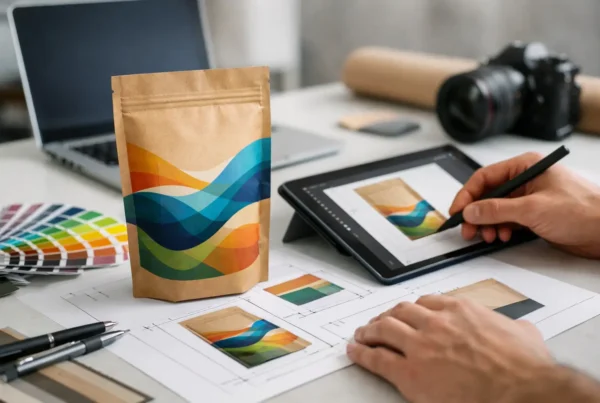
7. Use colour with a practical print strategy
Colour is valuable when it makes your packaging recognisable. It can also become expensive or visually confusing when every panel competes for attention. A disciplined palette usually travels better across paper bags, plastic carriers, mailing bags and event packaging than a design made for one format alone.
Think about the colour of the bag material as part of the design. A dark print on natural paper can feel confident and understated, while a light print on a coloured carrier bag may offer stronger contrast. Requesting a proof or discussing the artwork before production helps identify details that may be lost in print.
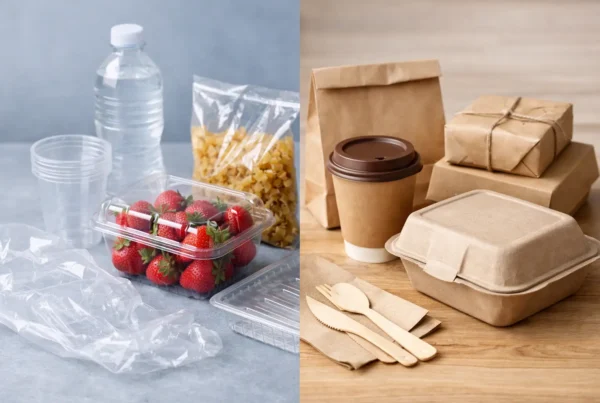
8. Make sustainability claims specific
Customers increasingly expect businesses to reduce unnecessary packaging, but vague green wording can create more questions than confidence. Choose materials based on a clear operational outcome: recyclable, reusable, compostable or made from an alternative material such as potato starch, sugar cane, cotton or jute.
Each option has a different use case. Compostable packaging may suit businesses with an appropriate disposal route and a need to replace certain single-use formats. Cotton and jute bags are better suited to repeated use. Recyclable options can be practical where local collection systems support them. The most responsible choice depends on the product, expected reuse and how customers are likely to dispose of it.
9. Add a message customers can act on
A short instruction can improve how packaging is used after purchase. For example, a discreet note explaining that a bag is reusable, recyclable or compostable gives the customer useful direction without turning the design into a lecture.
Keep claims accurate and relevant to the exact material supplied. If disposal depends on local facilities, say so clearly. This protects your business from overstating an environmental benefit and makes it easier for customers to make the right choice.
10. Create seasonal packaging without rebuilding your whole range
Seasonal bags can bring energy to Christmas, local events, new product launches and promotional campaigns. They are particularly useful when a business wants a fresh look without changing its main brand identity.
The sensible approach is often to retain the same bag size and material specification, then change the artwork. This keeps ordering and stock management simpler. A limited print run may be worthwhile for a high-footfall period, but it is worth checking demand before committing to a design that will only be relevant for a few weeks.
11. Design for staff as well as customers
Packaging that looks excellent but is awkward to store, open or fill will create problems behind the counter. Retail teams need bags that separate easily, handles that are quick to grab and sizes that are straightforward to identify during a busy shift.
Ask the people packing orders to test samples before placing a larger order. Their feedback can reveal issues that are not obvious in a flat product photograph, such as a handle that catches, a bag that slips on a counter or a mailing pack that takes too long to seal.
12. Plan the order around your real usage
Wholesale pricing and efficient production are most useful when the specification is stable. Look at how many bags you use in a normal month, account for seasonal peaks and decide which formats are core to your operation. Ordering too little can mean frequent reorders; ordering too much can tie up storage and cash in a design that is about to change.
For custom printed packaging, lead time should be part of campaign planning rather than an afterthought. UK manufacturing can shorten supply routes and give you closer control over quality, but artwork approval, production scheduling and delivery still need sensible notice.
Turning retail packaging ideas into a workable specification
The best packaging brief is built around a few practical answers: what goes inside, how much it weighs, where it travels, how it should look and what should happen to it afterwards. From there, material and format become easier to choose.
Oversolve can help businesses turn those answers into printed carrier bags, mailing bags and retail packaging suited to their order volumes, branding and environmental priorities. Start with the customer handover you want to create, then specify the packaging that can deliver it reliably every time.