A perfectly cooked burger that arrives sweaty, a curry that leaks into the carrier bag, or chips that lose their crunch before the customer opens the lid can undo a great deal of work. Food packaging for takeaways is not simply a container at the end of service. It protects the product, shapes the handover and sends your brand out into the street, car park or workplace with every order.
For UK food businesses, the right choice balances heat, moisture, grease, transport time, presentation, cost and environmental expectations. There is no single material or format that suits every menu. A coffee shop, a busy delivery kitchen and a premium street-food trader all have different practical needs. Getting the specification right starts with understanding what the food does after it leaves the counter.
Start with the journey, not the container
The most useful question is not, “What is the cheapest takeaway box?” It is, “What must this pack do between preparation and eating?” Consider whether food will be collected or delivered, how long it may sit before it is opened, whether it will be stacked with other items, and whether the customer is likely to reheat it.
Hot, crisp food needs controlled ventilation. A tightly sealed container can trap steam, making fried food soft and reducing its appeal. Saucy dishes need secure lids and strong seams. Greasy foods require a suitable barrier so the pack remains presentable and does not compromise the carrier bag. Cold food has its own requirements: salads and desserts need protection from crushing, while clear lids can help customers check that their order is complete without opening it.
Portion size matters just as much. An oversized carton allows food to move around and cool too quickly, while an overfilled pack can fail at the lid or create spills. Testing a small selection of formats with real menu items is usually more valuable than selecting packaging from a photograph or a generic size guide.
Think about the complete order
Customers do not experience a burger box, dip pot and carrier bag as separate purchases. They experience one order. The full pack needs to travel together safely, be easy to carry, and look considered at the point of handover.
A strong paper carrier bag with a flat base may be the sensible choice for boxed meals and drinks, whereas a lighter bag may suit a single bakery item. Where hot food is involved, the bag should provide enough strength without encouraging condensation to build up. Handles, base capacity and pack dimensions all deserve attention, particularly for delivery orders with several containers.
Choosing food packaging for takeaways by menu type
Material selection should follow the food, the service model and the disposal route available to your customers. Paper, board, plastic, bagasse, sugar-cane-based materials and compostable alternatives each have a role. The best option is the one that performs reliably for the intended use and supports a clear, credible message to customers.
Burgers, wraps and fried food
Burger boxes, clamshells, wraps and chip scoops need to handle warmth and grease while preserving texture. Board formats can offer a smart, substantial presentation and a good printing surface, but the board grade and any grease-resistant treatment must be suited to the food. Ventilation can be useful for fried items, although too much exposure may allow food to cool more quickly.
For busy collection counters, easy-fold cartons can save valuable seconds. For delivery, a more secure closure and a carrier bag with enough structure to keep boxes level may be worth the additional unit cost. A failed order costs more than a fractionally cheaper pack.
Curries, noodles and saucy dishes
Leak resistance is the priority for liquid-rich meals. Containers need a dependable lid fit, suitable heat tolerance and enough rigidity to prevent distortion when carried. Where different components are packed together, separating sauces, rice and garnishes can protect texture and make the meal feel more premium on arrival.
It is sensible to check how containers perform after twenty to thirty minutes in a delivery bag, not just when freshly filled. Heat, movement and stacking can reveal weak points that are not apparent at the counter. If customers commonly reheat food, provide clear, accurate guidance based on the specific packaging material rather than making broad assumptions.
Bakery, cafés and cold food
Sandwich wedges, pastries, cakes and salads benefit from packaging that protects appearance. Windows can showcase fresh products and support faster choice at a display counter. For cakes and delicate bakes, a firm base and enough headroom are essential. A beautiful product that arrives with icing on the lid is not doing your brand any favours.
Paper bags can be effective for dry bakery items and can be printed to reinforce your identity. For chilled products or anything with dressing, moisture resistance and secure closure are more significant than appearance alone. The right balance often involves a practical food container inside a branded outer bag.
Use branding where customers will actually see it
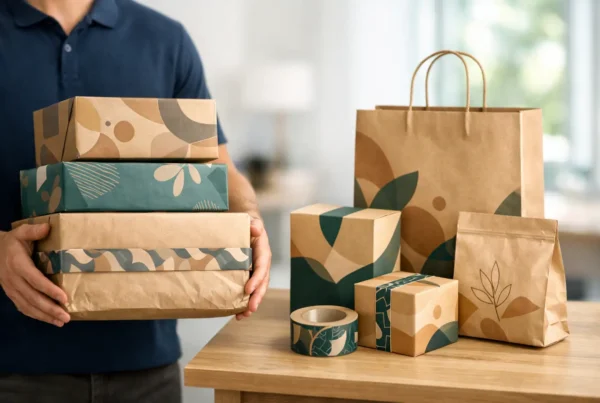
Plain food containers may be appropriate for some high-volume operations, but the outer packaging is often a missed marketing opportunity. A printed carrier bag, paper bag or delivery bag takes your name beyond the premises. It can be seen on the walk home, in an office kitchen or during a delivery handover, creating repeated local visibility without buying another advert.
That does not mean every surface needs a complex design. Clean branding, a recognisable colour palette and legible contact details are often more effective than overcrowding the bag. Consider how the print will look at a distance and whether it remains clear on the chosen material. A single-colour print can be commercially effective; multi-colour spot printing may be right where your visual identity depends on particular colours.
Consistency also matters. If customers see the same name, logo and quality of presentation on your menus, food packs and carrier bags, the business feels established. For independent operators competing with national chains, that consistency can make a noticeable difference to perceived value.
Make sustainability claims practical and clear
Customers increasingly look at the packaging as well as the meal. They may expect fewer unnecessary components, recyclable materials, reusable bags or compostable options. Those expectations are reasonable, but material choice needs to be matched to local collection systems and the actual use of the product.
For example, a compostable format can be a strong choice where the food service setting has an appropriate food-waste collection route. If customers are most likely to put packaging into general waste, the environmental benefit may be less straightforward. Recyclable paper or board can be useful, but heavy food contamination can affect whether it is accepted for recycling. Clear disposal wording can help, provided it is accurate for the material and setting.
Reducing material is often the first sensible step. Do not add cutlery, napkins, sauce pots or carrier bags automatically if customers do not need them. Then select packaging that provides the necessary protection without excessive layers. Reusable options such as bags for life can be particularly useful for retail food sales, hampers, events and higher-value orders.
Environmental performance should never come at the cost of food safety, product quality or a pack that fails in transit. A supplier should be able to help you compare the available options honestly, including the trade-offs between price, performance, printability and end-of-life claims.
Build a specification that protects your margins
Packaging spend is more than the unit price. A slightly stronger bag can reduce replacement orders and refunds. A correctly sized carton can improve packing speed and reduce wasted materials. A printed bag can add brand recognition that plain packaging cannot deliver.
When reviewing a range, look at case quantities, storage space, lead times and order frequency alongside the price per unit. Seasonal businesses and event caterers may need a flexible stock plan. Growing delivery operations may need packaging that can be reordered consistently as volumes rise. If you are introducing branded packs, allow enough time for artwork approval, production and delivery before a launch or busy trading period.
It is also worth standardising where possible. Using a small number of versatile, well-tested formats can simplify stock control and reduce packing errors. However, standardisation should not force very different menu items into unsuitable containers. A focused range with one or two specialist packs is often the practical middle ground.
Work with a manufacturer that can guide the detail
Food packaging decisions involve more than choosing a box and adding a logo. You need the right material, dimensions, print approach and supply plan for the way your business operates. Direct UK manufacturing can offer useful control over quality, communication and turnaround, especially when you require printed carrier bags or tailored retail packaging alongside your food packs.
At Oversolve, we manufacture and supply packaging for businesses that need practical performance and a professional finish. We can help guide you through bag materials, printed formats and environmentally focused alternatives, so the packaging supports your service rather than becoming another operational problem.
The best takeaway packaging is rarely the most decorative or the cheapest on paper. It is the pack that reaches the customer cleanly, keeps the meal at its best, carries your name with confidence and gives your team one less thing to worry about during a busy service.