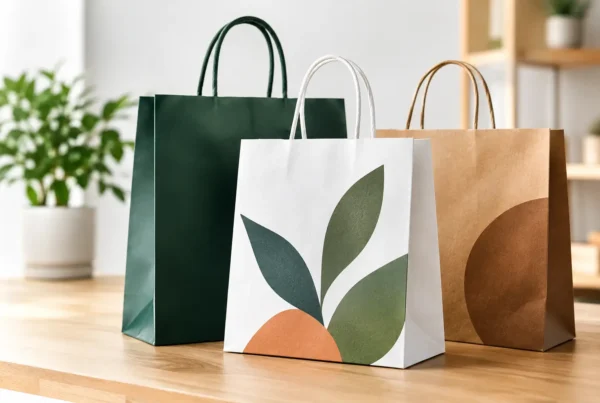
A busy exhibition aisle gives you only a few seconds to make an impression. Once a visitor has picked up brochures, samples or a product, branded event giveaway bags become the item that carries your name through the hall, onto public transport and back to the office. The right bag is not simply a container for event materials. It is practical packaging, a visible piece of brand advertising and, when specified well, something people may use again.
For event organisers, exhibitors and promotional teams, that combination matters. A bag that tears before lunchtime, is too small for an A4 brochure or feels at odds with your environmental message can undermine an otherwise polished stand. A well-made printed bag does the opposite: it keeps materials together, makes collection easier and gives your branding a useful life after the event.
What branded event giveaway bags need to do
The best format depends on what attendees will carry and where they are likely to take it. A delegate collecting a catalogue, notebook and product samples has different needs from a visitor receiving a lightweight leaflet and a promotional item. Start with the contents, rather than choosing a bag solely from a photograph or unit price.
Size is often the first practical decision. A gusseted carrier bag gives room for thicker packs and boxed samples, while a flatter format can suit literature, small gifts or press materials. If you are handing out A4 documents, allow enough height and width for them to sit comfortably without bending or protruding. It sounds straightforward, but this is one of the most common ways an event bag becomes frustrating to use.
Handles also affect the experience. Die-cut handles can be a cost-effective option for lighter contents and short carrying distances. Loop handles offer a more substantial feel, particularly where visitors will be walking around a large venue. For a premium retail-style launch, rope handles or cotton bags may better support the presentation. The right choice is a balance between load, appearance, intended reuse and budget.
Strength should be specified honestly. There is little value in buying a heavy-duty bag if it will hold a pen and a leaflet, but a lightweight bag is a false economy if it has to carry product samples, a catalogue and several competitor brochures. We can help guide you towards the right material thickness and construction for the likely load, so the bag performs properly without paying for unnecessary material.
Match the material to the event and message
Material selection is where practical requirements and brand positioning meet. The most suitable option is not always the same across every event programme.
Printed paper bags are a strong choice for conferences, retail pop-ups, food events and brand activations where a natural, tactile finish supports the visual identity. They offer a professional surface for logos and campaign artwork, are available in different paper weights and can be recycled where suitable collection facilities exist. Paper also works particularly well when visitors are likely to carry the bag straight from the venue into shops, cafés or the office.
Plastic carrier bags remain useful where moisture resistance, strength and a compact format are priorities. They can be produced in a range of styles and can be an efficient option for high-volume events. Recycled-content and recyclable options may help meet the needs of a campaign, but any environmental message should reflect the exact material and local disposal route. Clear claims are better than broad promises.
For organisations aiming to reduce reliance on conventional plastic, alternatives such as potato starch and sugar cane materials can be considered for relevant applications. These need to be selected with care. Compostability, recyclability and reuse are different outcomes, and each relies on the bag specification and the facilities available to the end user. A compostable bag may be appropriate for a food-focused event, for example, while a reusable cotton or jute bag may offer better value for a premium event where guests are expected to keep it.
Cotton and jute bags are well suited to launches, hospitality events, staff packs and higher-value delegate gifts. Their higher initial cost means they are rarely the most economical choice for mass leaflet distribution. However, if a bag is attractive, useful and durable enough to be reused regularly, the cost per use and potential brand exposure can be compelling.
Avoid treating sustainability as a print message
A green colour palette or a leaf graphic does not make a bag environmentally responsible. Buyers increasingly look for practical evidence: recycled content, suitability for recycling, compostability where appropriate, reusable construction or reduced material use. Choose the product first, then communicate its credentials accurately.
That also means considering quantities. Ordering far more bags than the expected footfall creates avoidable waste, whatever material you choose. Use registration figures, historic attendance and the number of packs you genuinely expect to distribute. A modest contingency is sensible; an oversized order is not.
Design for visibility in a crowded venue
Event bags are often seen from a distance and in motion. That changes how artwork should work. A logo that looks excellent on a website header may disappear when printed too small on a moving carrier bag. Prioritise a clear brand mark, strong contrast and enough empty space for the design to breathe.
A single-colour print can be sharp, recognisable and commercially efficient, especially when your logo has a distinctive shape. Multi-colour spot printing can add impact for campaign graphics, product imagery or a more detailed identity. Neither is automatically better. The best approach depends on the bag material, print area, number of colours and how much visual information the attendee needs to absorb.
Keep essential messaging short. Your company name, logo, event campaign or concise callout may be all that is required. A bag is not a brochure. Dense copy, small web addresses and multiple competing messages usually lose clarity once the bag is folded, filled and carried.
It is also worth thinking about both sides. If attendees carry the bag at their side, one face may be more visible than the other. Printing on both sides can increase exposure, but it also adds cost. For a one-day local event, a well-designed single-sided print may be enough. For a national exhibition or a bag intended for repeated use, two-sided branding may be a worthwhile investment.
Plan the order around the event date
The event date is fixed, so bag production should not be the final item on the campaign checklist. Artwork approval, material choice, print method and delivery all need time. Leaving the decision late can limit the formats available or force compromises on colour, quantity or specification.
Before requesting a quotation, have the core details ready: required quantity, bag dimensions, approximate contents and weight, preferred material, print colours, artwork status and delivery deadline. If you are unsure about any of these, an experienced manufacturer can work through them with you. The important thing is to flag uncertainty early rather than approving a format that is unsuitable for the job.
Direct UK manufacturing can make a meaningful difference where lead times are tight or quality control matters. Working with a manufacturer rather than an intermediary gives you clearer communication about what can be produced, how the bag will be constructed and when it can be delivered. Oversolve manufactures printed bags for business customers and can help turn an event brief into a practical specification, from lower-volume paper bags to larger wholesale orders.
Check a sample before committing to volume
Where timing allows, assess a physical sample or proof against the actual event contents. Put the catalogue in it. Add the sample pack. Carry it for a few minutes. Check that handles are comfortable, the print is clear and the finished bag reflects the standard of your stand.
This is especially valuable for unusual dimensions, darker print colours, heavy contents or premium materials. A small check before production is considerably easier than managing unsuitable bags on the morning of an exhibition.
Make the handover part of the experience
How the bag is given away affects its value. Bags placed in a pile near the entrance may disappear before attendees engage with the stand. A bag offered after a meaningful conversation, product demonstration or registration can feel more purposeful and helps the team control distribution.
Consider what goes inside, too. A useful bag filled with a carefully chosen item, concise literature and a relevant offer is more likely to travel home than a bag overloaded with generic paper. If visitors have chosen the contents themselves, they are also more likely to keep them organised and retain the bag.
The strongest event packaging works quietly. It carries what it needs to carry, presents your organisation professionally and remains useful after the venue doors close. When the material, size, print and quantity are chosen for the real event rather than a generic promotion, the bag has a better chance of being kept, reused and noticed again.