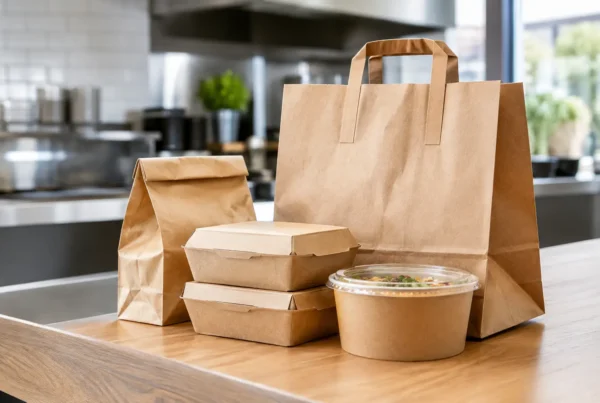
A carrier bag has a short journey from till to home, but the material decision behind it can affect sourcing costs, customer perception and waste handling long after the sale. Circular packaging trends are therefore moving beyond a simple choice between paper and plastic. UK businesses are asking more useful questions: can this bag be reused, recycled or composted in the right conditions, and does its specification genuinely suit the product and customer?
For retailers, food operators and e-commerce brands, circularity works best when it is built into the brief from the start. The aim is to keep materials in use for longer, reduce avoidable waste and choose an end-of-life route that customers can realistically follow. That requires practical decisions on bag strength, print coverage, handles, recycled content and how the packaging will be collected or disposed of.
Circular packaging trends are becoming more specific
The broad demand for environmentally responsible packaging remains strong, but buyers are becoming more discerning. A general ‘eco’ claim is no longer enough for a procurement team or a customer who wants to know what to do with the bag after use. Clear material information and an appropriate disposal route carry more weight than vague sustainability language.
This is changing specifications. Rather than selecting the lightest possible bag, businesses are considering the whole working life of the product. A heavier reusable carrier bag may use more material than a thin single-use option, but it can make commercial and environmental sense if customers use it repeatedly. Equally, a paper bag is not automatically the right answer if it is likely to tear under the intended load, requiring double-bagging or replacement.
The useful trend is not one material replacing every other material. It is fit-for-purpose packaging with a credible next step.
Reuse is being designed in, not added on
Bags for life continue to be a practical circular format for supermarkets, independent retailers, events and promotional campaigns. Their value depends on durability and desirability. A well-made bag with comfortable handles, a suitable gauge and a strong printed design is more likely to be kept in a car, used for shopping or carried again on a daily errand.
Branding has a direct role here. When a reusable bag looks considered rather than disposable, it becomes a mobile advertisement for the business. A bold single-colour print can be highly effective, while multi-colour spot-printing can support a more detailed retail identity. The key is to match the design to the expected lifespan. Printing a short-lived promotion on a bag intended for years of use may not be the best commercial choice.
For businesses selling heavier goods, the specification matters as much as the message. Handle type, gusset size and material strength should be chosen around the actual product weight, not an estimate. This helps avoid failures that undermine both reuse and customer confidence.
Recycled content needs a clear purpose
Packaging made with recycled content is a central part of the circular economy because it creates demand for recovered material. For carrier bags and mailing formats, it can be an effective route where the material performance, finish and print result meet the application.
However, recycled content is not a standalone answer. Buyers should consider whether the finished bag can itself be recycled through the relevant stream, whether the material is suitable for the items it will carry and how much ink coverage is required. A dark, heavily printed bag may work well for a fashion retailer, for example, but a food business will need to consider the particular requirements of its packaging application.
The most credible approach is to state what the bag is made from and provide simple disposal guidance where appropriate. Customers should not need specialist knowledge to understand whether a bag belongs in a recycling collection, should be reused, or needs another route.
Compostable materials are growing, with conditions
Compostable alternatives made from materials such as potato starch and sugar cane appeal to businesses looking to move away from conventional single-use plastic. They can be particularly relevant where packaging is likely to be contaminated with food or where a composting route is genuinely available.
But compostability is not the same as permission to discard a bag anywhere. The conditions needed for composting vary, and access to collection facilities is not consistent across the UK. A compostable bag can be the right option for a food venue, festival or takeaway operation, but only when its use case and disposal message are properly considered.
This is where a material-led conversation is valuable. A bag used to carry dry retail goods has different needs from one carrying hot food, fresh produce or greasy items. Moisture resistance, heat, shelf life, strength and print requirements all influence the right choice. Choosing compostable material simply because it sounds greener can create confusion if customers have no realistic way to process it after use.
Paper remains valuable, but it must perform
Paper bags have strong customer recognition and suit many retail, hospitality and food applications. They offer a natural surface for printed branding and can make a product handover feel more premium. Twisted-handle and flat-handle options can be selected according to load, presentation and budget, while different paper weights help businesses balance cost against performance.
The circular opportunity with paper lies in reuse and recycling, provided the bag is kept relatively clean and dry. Good design supports this. Avoiding unnecessary laminate finishes, excessive material combinations and complicated add-ons can make a format easier to manage at end of life.
There is still a trade-off. Paper can be less suitable for wet conditions, heavy goods or long delivery journeys unless it is specified carefully. For an e-commerce business posting clothing, a paper mailing bag may be attractive, but it must protect the order through handling, weather exposure and the final doorstep delivery. In some cases, a recyclable mailing bag or a reusable return format may be the more workable circular choice.
E-commerce is pushing circular packaging beyond the checkout
Online retail has made packaging recovery more difficult because the customer, not the business, controls the final disposal point. That is increasing demand for mailing bags that are easy to understand, appropriately sized and designed to prevent unnecessary material use.
Right-sizing is one of the most practical circular packaging trends for e-commerce. An oversized mailing bag uses more material, takes up more delivery space and can make a product feel poorly presented. A better-fitted format reduces waste while helping goods arrive in good condition.
Returns also deserve attention. A dual-seal mailing bag can allow a customer to reuse the original pack for a return, reducing the need for a second bag. It will not suit every product or fulfilment process, but for clothing and lighter retail goods it can offer a simple, customer-friendly improvement.
For high-volume dispatch, consistency is just as important as material choice. If teams have to guess which bag fits which product, overpacking quickly becomes routine. Standardising a small range of tested sizes can reduce waste, speed packing and make purchasing easier to control.
Better print choices support longer use
Printed packaging has sometimes been treated as separate from sustainability, yet the two decisions are closely connected. A well-printed carrier bag encourages reuse, reinforces quality and can reduce the temptation to add extra promotional inserts. It gives the customer one useful item that carries the brand beyond the original transaction.
That said, print should be proportionate. Consider whether full coverage is necessary, whether the artwork will remain relevant through repeated use and whether essential disposal information can be made easy to read. A clear logo, concise message and appropriate ink coverage often deliver more value than a crowded design.
Working directly with a UK manufacturer can make these choices easier to test before committing to volume. Oversolve can help businesses match material, dimensions, handles and printing to the way the bag will actually be used, rather than selecting from a generic environmental label.
How to specify circular packaging with confidence
Start with the product journey. Consider what is being carried, how far it travels, whether it faces moisture or food contamination, and whether the customer is likely to keep the bag. Then choose the material route that is most realistic: repeated reuse, straightforward recycling, composting under suitable conditions, or a combination of these aims across different product lines.
Ask suppliers for clear information on material composition, available recycled content, expected performance and the intended disposal route. Check that any environmental claim is relevant to the finished format, not just one ingredient within it. Where packaging will be printed, review proofs carefully so brand artwork, legal information and disposal guidance remain legible.
Finally, avoid changing every format at once. Trial a new paper carrier bag in selected stores, introduce reusable bags around a particular campaign, or test revised mailing sizes with a portion of orders. Real feedback from staff and customers will show whether the specification works in practice.
The strongest circular packaging choice is the one your business can use consistently, your customer can understand easily and your supply chain can deliver without compromise.