A customer leaves with more than a purchase. They carry your retail bags through the high street, into their car, on public transport or back to the office. If the bag is awkward, flimsy or poorly printed, that final brand interaction can undermine the care taken over the product itself. When it is well specified, it protects the sale and puts your name in front of potential customers long after the till receipt has been folded away.
For retailers, food businesses, event organisers and online sellers, the right bag is not a generic finishing touch. It is a practical part of the customer experience, an operating cost to manage and a visible piece of brand marketing. The best choice depends on what you sell, how customers receive it and what you need the bag to say about your business.
Retail bags should start with the job they need to do
A good-looking bag that cannot carry its intended load is a false economy. Start with the product: its weight, shape, edges, temperature and likelihood of leaking or marking the bag. A boutique garment, a stack of boxed cosmetics, a hot takeaway and a framed print all need very different packaging.
Think about the full journey rather than the point of sale alone. Will a customer carry the bag for five minutes or an hour? Will it be exposed to rain? Does it need to stand upright in a car? Is it packed by staff at speed during busy periods? These details determine the sensible combination of material, size, gusset and handle.
Handle choice matters more than many buyers expect. Patch handles and vest-style carrier bags suit high-volume, practical use. Rope or ribbon handles can add perceived value for premium retail, but they may not be right for heavier goods or rapid packing. Paper bags with twisted handles offer a familiar, smart presentation for many shops, cafés and event brands, provided the paper weight and handle attachment match the load.
The bag must also work for the people using it behind the counter. If it is difficult to open, takes up too much storage space or needs repeated double-bagging, labour and material costs soon rise. A reliable specification reduces those everyday frustrations.
Choose the material around the application
There is no single material that suits every business. The practical answer is usually a balance between strength, appearance, disposal route, customer expectations and budget.
Paper carrier bags
Printed paper bags are a strong fit for fashion, gifts, food-to-go, cosmetics and promotional retail. They provide a natural print surface and can create a premium, considered appearance without making the product feel over-packaged. Kraft paper is popular where a more natural finish supports the brand, while white paper gives colours and detailed artwork a brighter base.
Paper needs the correct grade for the item being carried. A bag for lightweight bakery products does not need the same construction as one intended for bottles, books or multiple boxed purchases. Moisture is another consideration. A paper bag may be the right brand choice, but it needs appropriate protection if customers routinely walk home in poor weather or carry chilled products.
Plastic carrier bags and bags for life
Plastic carrier bags remain useful where strength, water resistance and compact storage are priorities. They can be produced in a range of thicknesses and finishes, with options for standard carriers, heavier-duty bags for life and specialist retail formats. For businesses handling heavier, irregular or damp goods, a correctly specified plastic bag can prevent breakages, product damage and unnecessary use of extra bags.
Reusable bags for life can also encourage repeat exposure for your branding. Their value lies in being useful enough to keep. A well-made reusable bag that customers take shopping, to work or to an event has a far longer brand life than a bag designed for one short journey. That does mean the design, construction and message need to be worth keeping too.
Lower-impact material options
For businesses replacing conventional single-use plastic, there are credible alternatives including compostable bags made from potato starch, sugar cane-based materials, cotton and jute. Each has a different use case, finish and end-of-life story. Compostable options may suit food, produce and businesses with suitable disposal arrangements. Cotton and jute can make sense for durable promotional, gift or lifestyle bags intended for repeated use.
The key is to avoid broad environmental claims that do not match the product or the way it will be used. Recyclable, reusable and compostable are not interchangeable terms. A bag should be chosen with clear customer guidance, realistic local disposal options and a design that encourages the intended outcome.
Printed retail bags make the handover memorable
A plain bag carries goods. A printed bag carries the brand beyond your premises. It is one of the few marketing formats that a customer willingly takes into public, often while feeling positive about a purchase.
That does not mean every bag needs a busy design. In many cases, a simple logo, strong brand colour and clearly positioned contact detail are more effective than trying to fill every available area. For premium brands, restrained printing on quality paper or a reusable fabric bag can signal confidence. For value-led retailers, bold, high-contrast artwork may deliver instant recognition from a distance.
Printing should be planned alongside the bag dimensions. A large logo may look impressive on a flat artwork file but become distorted by side gussets or hidden when the bag is folded. Fine type, pale ink and intricate detail can also lose impact on textured materials or at small print sizes. A manufacturer can help guide you towards artwork, ink colours and print positions that work in production as well as on screen.
Single-colour printing is often a cost-effective choice for straightforward identity-led designs. Multi-colour spot printing gives more scope for recognisable branding, campaign artwork and retail graphics. The right option depends on order quantity, the material selected and how important colour accuracy is to your brand.
Get the size and specification right before ordering
A bag should fit the usual purchase, not the exception. Ordering an oversized bag for small products wastes material, looks less polished and can make items move around in transit. Ordering too small encourages staff to force products into bags, creating damaged packaging and uncomfortable customer carries.
Review a representative sample of your products before deciding on dimensions. Include your most common combinations, not only individual items. A shop may sell a candle easily in one bag, for example, but the real test is whether that bag also holds a candle, gift box and greeting card during peak trading.
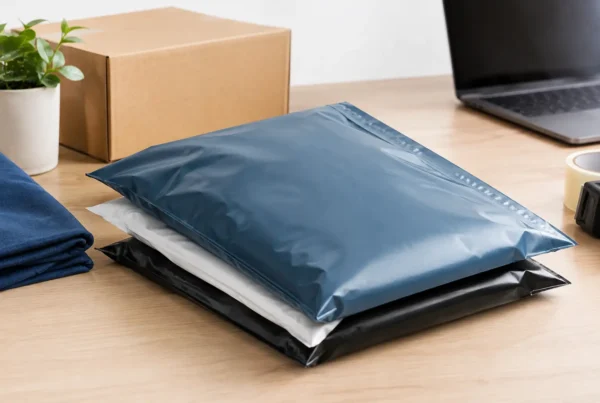
For businesses that offer collection and delivery alongside in-store sales, it can be sensible to use more than one format. A branded retail carrier bag may be ideal at the counter, while mailing bags or courier bags provide better protection for posted orders. Keeping the visual identity consistent across both helps customers recognise the same business at every handover.
Order volumes require a commercial view too. Larger runs can reduce unit cost, but only if you have the storage space and confidence that the design will remain current. Seasonal retailers, growing businesses and campaign-led brands may benefit from a more measured initial quantity. Established businesses with stable requirements can often gain most from planned wholesale supply.
Work with a manufacturer that can solve the practical details
The difference between choosing a bag and specifying one well is usually found in the details: micron or paper weight, gusset depth, handle reinforcement, print coverage, packing format and lead time. These are not always obvious from a product image, yet they affect quality, usability and cost.
Oversolve manufactures in the UK and can help businesses turn a brief into a workable printed bag specification. Direct manufacturing gives buyers clearer control over the finished product and avoids unnecessary layers between the order and production. It also supports businesses that need dependable lead times, consistent repeat orders and practical advice on material choices.
Before approving a design, ask what the bag needs to carry, where it will be used, how it will be disposed of or reused, and what customers should notice first. Those questions keep the decision focused on performance rather than appearance alone.
The most effective retail bags feel effortless to the customer because the thinking has been done before they reach the counter. Choose a format that earns its place in your operation, print it with purpose and let every journey home reinforce the quality of what your business sells.