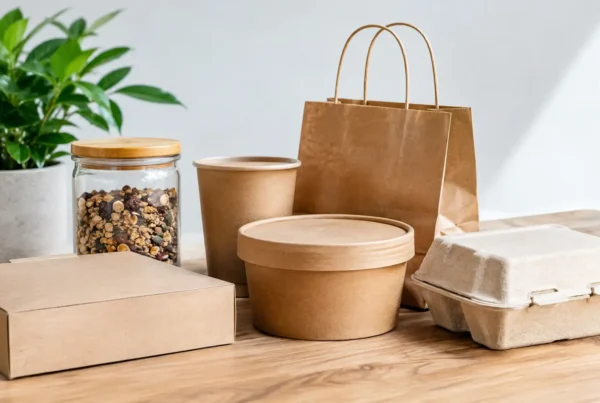
A well-chosen carrier bag does more than carry a purchase from the counter to the car. Single colour bag printing puts a recognisable version of your brand into customers’ hands without adding unnecessary cost or visual clutter. For retailers, food businesses, event teams and online sellers, that can make it one of the most commercially sensible ways to specify branded packaging.
The strongest one-colour designs are not simply multi-colour artwork with most of the detail removed. They are designed for the bag: clear, purposeful and legible at a glance. Get the format, material and print area right, and a single ink colour can look every bit as professional as a more complex print job.
Why single colour bag printing remains a smart choice
A single colour design uses one spot ink to print your logo, message or artwork. It may be a black logo on a white paper bag, white artwork on a dark recycled carrier bag, or a brand-colour print on a natural kraft finish. The production approach is straightforward, which can help control unit cost while giving your packaging a consistent branded appearance.
For many businesses, clarity matters more than complexity. A shop name, distinctive logo, web address or short message often has greater impact when customers can read it quickly from a distance. This is particularly useful for busy high streets, takeaway collections, trade counters and events, where people see the bag in passing rather than studying it closely.
There is also a practical advantage in keeping artwork focused. Fewer print variables can make approvals easier and reduce the risk of fine details being lost on textured paper, flexible film or a gusseted bag. If your brand identity already relies on a strong wordmark, icon or signature colour, a one-colour print can reinforce it with confidence.
That does not mean one colour suits every brief. Brands using detailed illustrations, product photography or several essential brand colours may benefit from multi-colour spot printing. The right choice depends on what must be communicated, the material you choose and how the bag will be used. We can help guide you through that decision before production begins.
Start with the job your bag needs to do
Print is only one part of the specification. A bag needs to carry the right weight, suit the product and present your business well at the point of handover. Choosing the bag first prevents a common mistake: selecting attractive artwork for a format that is not practical for the customer’s purchase or delivery.
A boutique clothing retailer may need a paper carrier bag with twisted handles and enough base width for folded garments. A café may require a food-safe paper bag that keeps orders together. An e-commerce seller may prefer a secure mailing bag that protects goods through the post. Each can carry a one-colour design, but the print position, bag dimensions and material behaviour will differ.
Match the material to your purpose
Paper bags offer a natural, premium-looking surface that works especially well with black, dark green, navy or a single brand spot colour. White or coloured paper can create a cleaner retail finish, while kraft paper gives a more understated feel. Paper is also available in recyclable options, subject to the overall bag specification and any added components.
Plastic carrier bags, mailing bags and bags for life can be a practical choice where strength, moisture resistance or repeat use is needed. A bold one-colour logo often stands out well on these formats, especially where the bag itself is a contrasting colour. For businesses reducing their reliance on conventional plastic, alternatives such as sugar cane, potato starch, cotton and jute may be appropriate depending on the required use, durability and end-of-life route.
Sustainability claims should always reflect the product actually supplied and how customers are likely to dispose of it. Compostable, recyclable and reusable are different outcomes, not interchangeable marketing terms. A considered material choice protects your credibility as well as your products.
Choose a size that supports the customer journey
An oversized bag can make smaller purchases look lost, while an undersized one creates frustration at the counter and increases the risk of damage. Think about the typical order rather than the occasional exception. Product dimensions, quantity per transaction, handle clearance and the need for protective tissue or food containers should all inform the finished size.
For mailing bags, allow enough room for the item and protective packing without paying to send unnecessary empty space. For carrier bags, consider what happens after the sale. A bag that is comfortable to carry and sturdy enough for a second use gives the printed brand more time in public view.
Make one-colour artwork earn its space
The best single-colour bag printing is built around hierarchy. Your logo should normally be the first thing people notice. A short supporting line, website or social handle can follow if it adds value. Trying to include every service, product category and contact detail usually weakens the effect.
Use solid areas carefully. Large blocks of ink can look striking, but they affect the overall feel of the bag and may be less forgiving on some materials than a cleaner line-based design. Fine reversed-out type can also be difficult to read if it is too small. A production-minded artwork review will check that line thickness, spacing and contrast are suitable for the chosen bag.
Colour selection deserves the same care. A printed ink colour can appear differently on white, brown, coloured or translucent materials. Natural kraft, for example, influences the perceived tone of the ink beneath it. If an exact brand shade is essential, discuss this early and approve the relevant artwork or sample process. If the objective is a bold, recognisable result rather than an exact colour match, a close spot colour may give better value.
Print placement changes the design too. Front and back printing gives the brand visibility from either side of the bag. A centred front print can feel clean and premium, while a lower placement may leave room for handles and preserve a larger area of unprinted material. Side gussets can provide extra branding space, but only when the bag’s construction and artwork justify it.
Where cost decisions make the biggest difference
The lowest unit price is not always the lowest packaging cost. If a thinner or poorly sized bag fails in use, customers notice. If an overcomplicated design needs more printing than your brand actually requires, you may be paying for detail that does not improve recognition.
With one-colour printing, the main cost considerations are usually bag type, material, size, thickness or paper weight, handles, print coverage, number of print positions and order quantity. Larger runs generally spread setup costs more effectively, but it is still sensible to order around realistic stock turnover and storage capacity.
There can be a case for splitting a requirement between formats. For example, a retailer might use an economical single-colour paper bag for everyday purchases and reserve a heavier reusable bag for larger baskets, promotions or seasonal gifting. Both can carry a consistent logo while serving different commercial purposes.
Direct UK manufacturing can also simplify planning. Shorter supply chains can support faster turnaround, clearer communication and greater control over the finished specification. At Oversolve, we manufacture printed bags for business customers, so we can work from the intended application through to the material, size and print approach rather than treating the bag as a generic commodity.
Give your printer a clear brief
A useful brief speeds up quotation and helps avoid revisions later. Include the bag format you have in mind, approximate dimensions, intended contents, expected quantity, preferred material, artwork files and required delivery date. If you are unsure about any of these, explain the real-world use instead. A packaging manufacturer can then recommend a specification that fits it.
Be clear about whether you need one side or both sides printed, whether the print is a standard ink colour or a specific brand reference, and whether the bag will be used for food, retail, delivery or promotional activity. It is also worth flagging any environmental requirement at the outset, such as recycled content, reusability or compostability, so it can be assessed alongside performance and price.
Single-colour design rewards decisive branding. Choose the message customers should remember, give it enough room to be seen and pair it with a bag that performs properly in their hands. That is how a simple printed bag becomes a dependable part of the customer experience, long after it has left your premises.